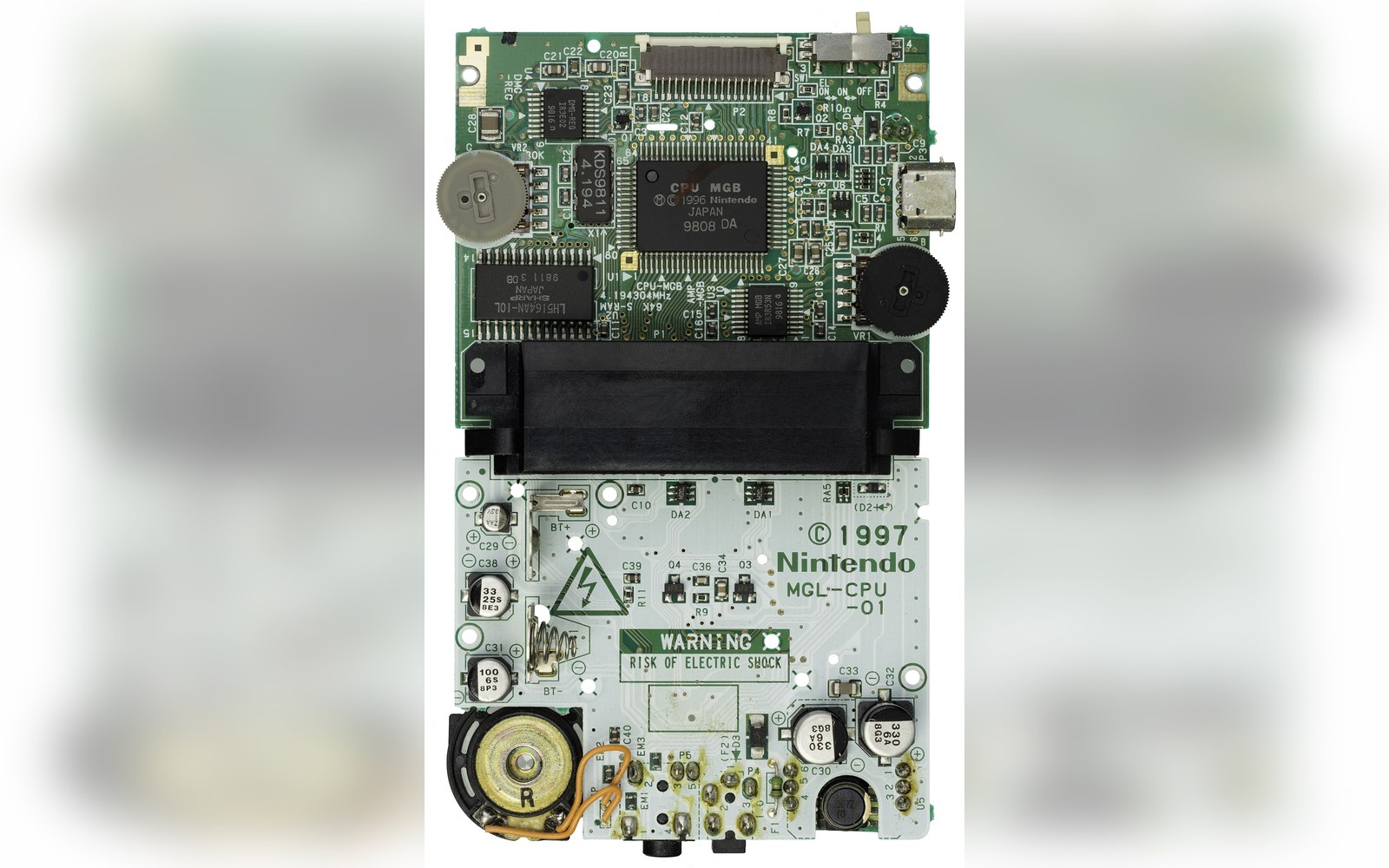
The case is not decoration
A console lives in a room governed by ambient temperature, children, pets, and the expectation that it will operate silently enough to share space with a television. That last condition is more demanding than it sounds. A PC tower tolerates a fan curve that climbs audibly under load because its owner expects to manage it; a console is sold to a household, and the acoustic contract it makes on day one must hold for seven years. The enclosure is therefore the first constraint — a fixed volume of air, a fixed surface area for heat to cross, and a lid that must click back down without a screwdriver if someone needs to vacuum the vents.
Every subsequent design decision flows backward from that box. The thermal budget — the number of watts the chip complex can consume before junction temperatures climb beyond their rated ceiling — is not set by what engineers wish they had. It is set by how many grams of copper the heatsink can weigh before the chassis flexes, how many millimetres of fan blade can spin before the acoustic floor rises, and how thin the rear exhaust can be cut before airflow stalls. Change the case, and you change the chip. The case comes first.
This is why platform holders freeze the specification early and hold it for the life of the generation. Silicon shrinks over seven years, and manufacturers do pass efficiency gains back through quieter fans and lower power bills, but the die that ships at launch and the die that ships in year six are functionally the same device from a developer's point of view. Developers accumulate knowledge of one machine across that span, and the platform holder's obligation is to make sure the machine they are learning does not move under them. A specification is, among other things, a promise about the interior of a box.

Every certification rule has a physical address
Pull the lid on a current-generation console and the layout is legible almost immediately. The system-on-chip ↗ sits at the geometric centre of the airflow path. Memory is stacked as close to the processor as the package allows, because every additional millimetre of trace between them costs bandwidth and bandwidth costs power. The storage sits at the edge of the airflow path where temperatures are lower and tolerances wider. The power-delivery circuitry occupies the quadrant with the shortest path to the external socket without routing noise back through the signal layers.
Each of those placements is also a rule in the certification checklist, expressed as a requirement about what software is allowed to assume. Because the storage controller sits in a fixed relationship to the CPU, the platform holder can guarantee a minimum sustained read rate and mandate that titles use it — which is why a game cannot legally ship on PlayStation 5, for instance, without having passed a battery of I/O streaming tests that would be meaningless on a PC where the storage subsystem is freely configurable. Because the memory bus is fixed in width and frequency, the platform holder can publish exact bandwidth figures and require that certified titles not exceed them in ways that produce visible corruption. The hardware makes the promise; the certification enforces it.
The same logic applies to the suspend-resume cycle that all three major platform holders — Nintendo, Sony Interactive Entertainment, and Microsoft — require titles to handle correctly. The ability to suspend a session and resume it cleanly is not a software feature bolted on top of the hardware; it depends on a dedicated block of memory that the platform holder reserves and the developer cannot touch. The certification test that checks suspend-resume behaviour is checking the integrity of that reserved region as much as the logic of the game itself. Pass the test and you have demonstrated that your title co-operates with the physical memory map.
The moulded shell as specification document
The outer case deserves more analytical attention than it usually receives. Console enclosures are manufactured by injection moulding ↗ — a process in which molten polymer is forced into a steel tool under high pressure and held until it solidifies. Tooling a mould for a complex consumer-electronics enclosure takes months and costs in the hundreds of thousands of dollars before a single production unit ships. That cost is committed before the final silicon is back from the fab, which means the case dimensions are locked before the chip measurements are confirmed. The tolerance stack between the die, the package, the PCB, the heatsink, and the moulded shell has to close — and close to within a fraction of a millimetre — across a supply chain that spans multiple countries and multiple vendors.
The controller lives inside the same constraint system. Tooling a moulded shell for a handheld device is a long-lead, high-cost commitment made before anything else is finalised, and the ergonomic geometry of the grip — the angle of the triggers, the travel of the analogue sticks, the placement of the face buttons — becomes a physical constraint that the platform holder must honour for the life of the generation. When a certification requirement specifies how a title must respond to a particular button combination, it is partly honouring the mechanical reality that the button exists, at a particular travel distance, generating a particular signal voltage, in a particular position under the player's thumb.
The rule is not arbitrary. It is the documentation of a part.
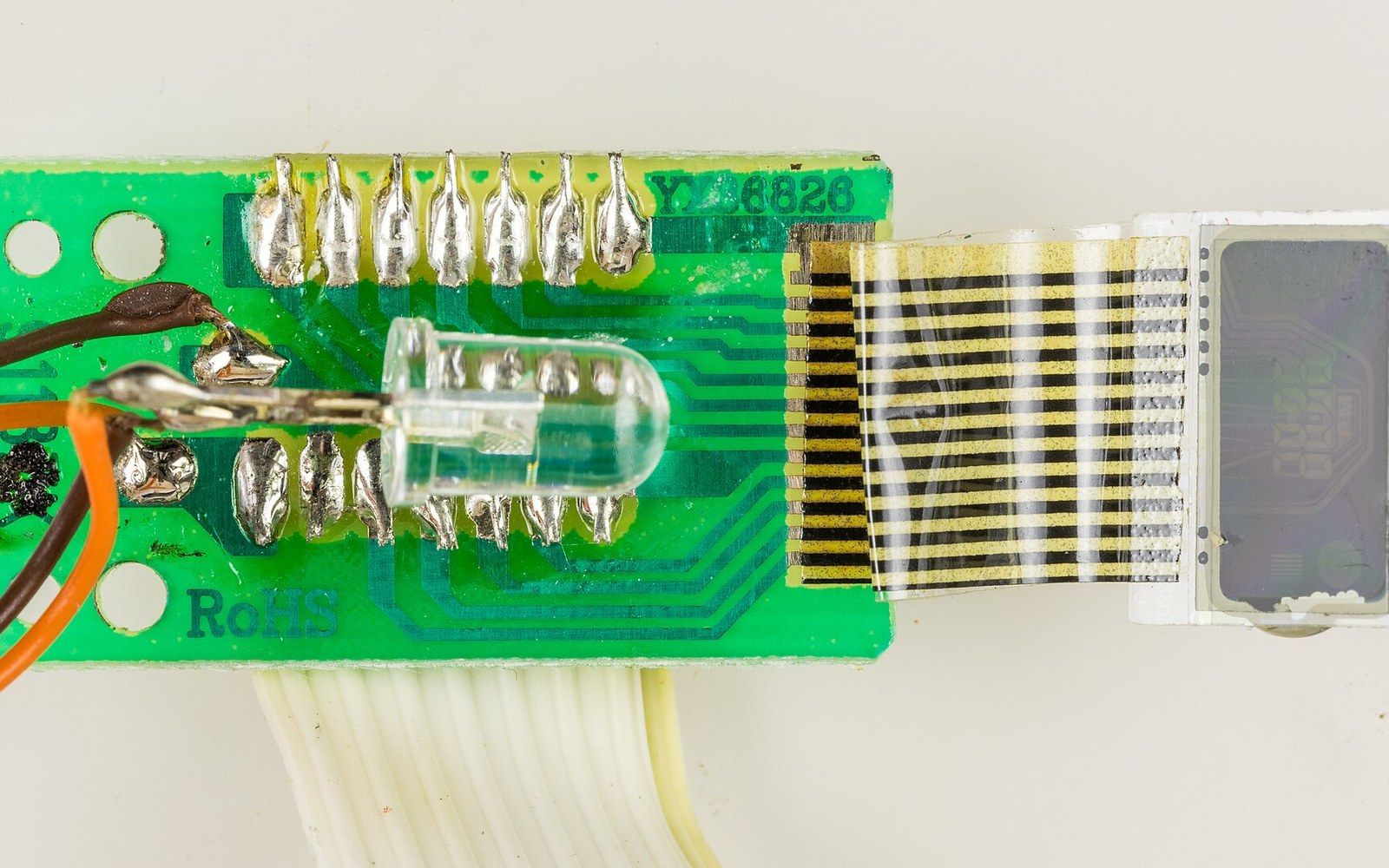
What the rule-set actually is
Taken together, the certification requirements that a studio must navigate before a title can ship are a text description of a physical object. The memory rules describe the bus. The I/O rules describe the storage controller and its placement in the airflow path. The suspend-resume rules describe the reserved memory block. The audio rules describe the output DAC and the downstream amplifier topology. The development kit that a licensed studio receives is the physical object; the Technical Requirements Checklist — the TRC, in Sony's terminology, and its equivalents at Nintendo and Microsoft — is the same object expressed as a list of pass-fail conditions.
That is also why a day-one patch cannot rescue a title that has failed certification on a hardware-adjacent requirement. A patch can fix logic, adjust values, swap assets. It cannot change the memory map, alter the storage controller's relationship to the CPU, or adjust the thermal contract the chip makes with its heatsink. The disc is finished long before the game is in many senses, but the hardware is finished longest of all — sealed, moulded, shipped, sitting in a living room — and every rule in the checklist was written to match it.